Technical Architecture
Combat Evolved LLC develops deterministic, real-time spatial computing systems for FPV aircraft built on tightly controlled embedded architectures.
This is not an overlay layer bolted onto flight video.
The AR system is mathematically integrated into the flight state itself.
The AR system is mathematically integrated into the flight state itself.
Core State Estimation
The platform operates fully in quaternion space. No Euler shortcuts.
Attitude estimation is maintained using:
Dual-IMU fusion for redundancy and noise shaping
Staged signal conditioning (low-pass prefiltering → state estimator)
Rotation-vector delta updates for stable interpolation
Time-stepped quaternion smoothing with adaptive step sizing
Long-duration stability is achieved without yaw drift accumulation typical of low-cost IMU stacks. Sub-degree Z-axis drift over extended runtime has been demonstrated on commodity sensors.
Explicit separation of reference frames is enforced:
Aircraft Space (filtered body attitude)
Gimbal Space (relative camera articulation)
Camera Space (world-referenced view transform)
This eliminates axis inversion artifacts and coordinate ambiguity common in Euler-based or improperly cascaded transform chains.
Spatial Projection Engine
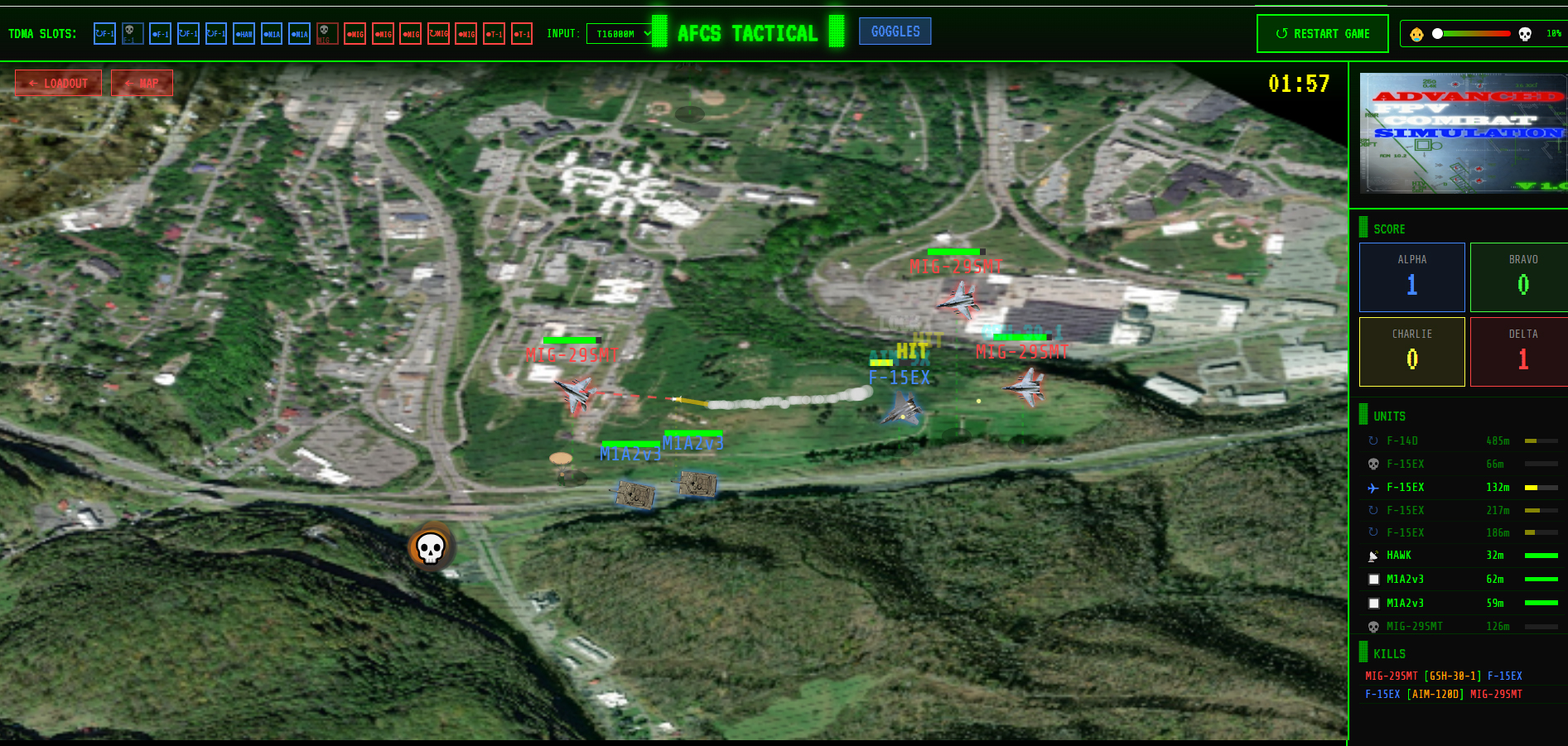
All objects exist in world space as persistent state entities.
Projection pipeline:
World-space object vector
Transform into Camera Space via quaternion composition
Convert to bearing/elevation
Nonlinear FOV mapping to display plane
The projection system is quaternion-native end-to-end.
No intermediate Euler conversion.
No intermediate Euler conversion.
This enables:
Stable 3D-to-2D projection under aggressive maneuvering
Correct lateral bearing behavior (no 90° inversion faults)
Deterministic overlay placement under high angular rate conditions
The system maintains overlay lock even under high vibration and rapid attitude transitions typical of freestyle FPV.
Deterministic Data Architecture
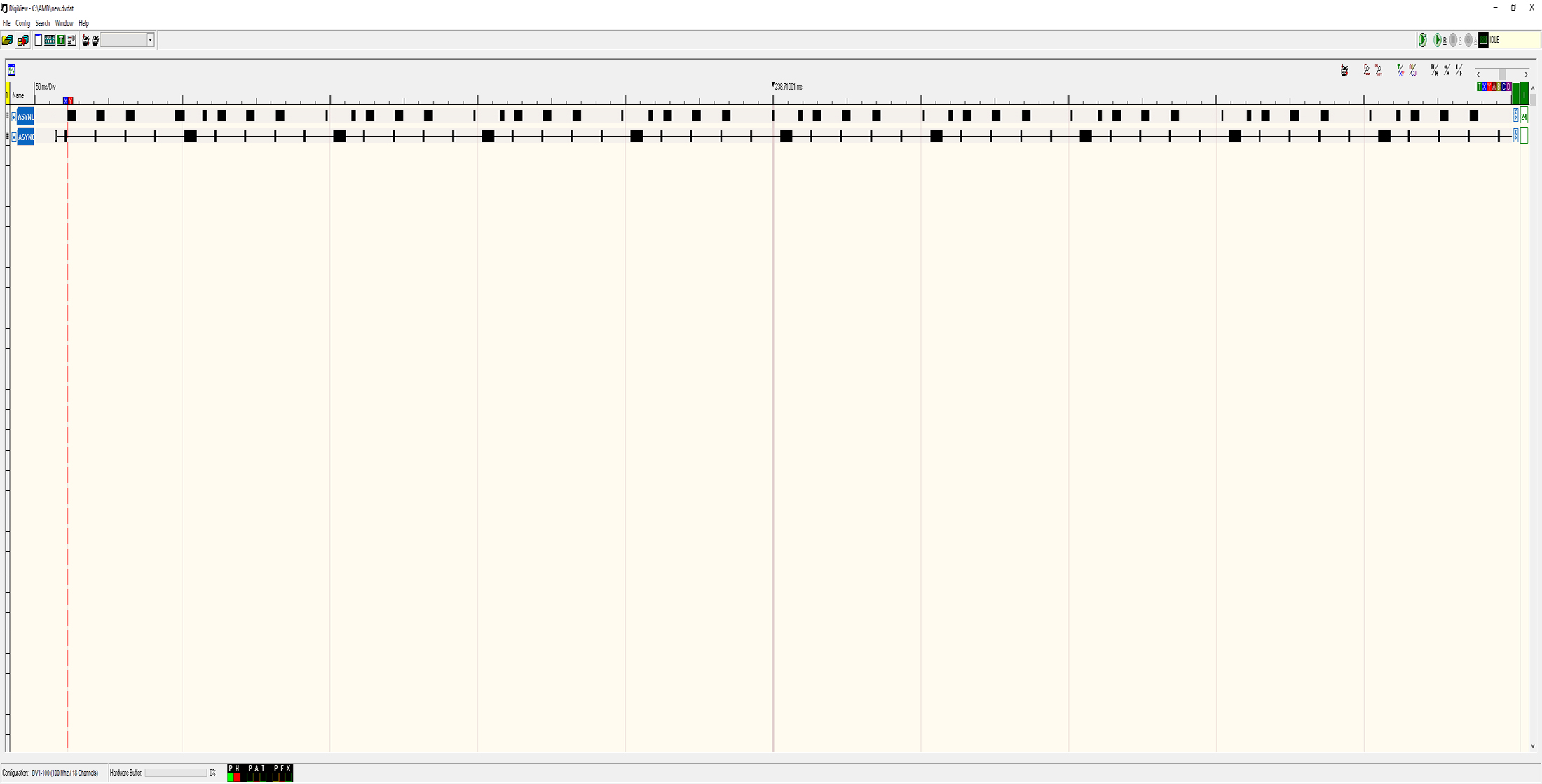
Telemetry and object state exchange operate on fixed-format binary packets with strict byte alignment.
Characteristics:
100 Hz isochronous exchange
Fixed start/end frame markers
No CRC (temporal determinism prioritized over retransmission latency)
Iterative object update segments
Separate transmit/receive structures for FC integration
The communication model favors bounded latency and predictable execution timing over reliability-through-retry paradigms.
Embedded Performance Layer
The platform operates with explicit hardware-level control:
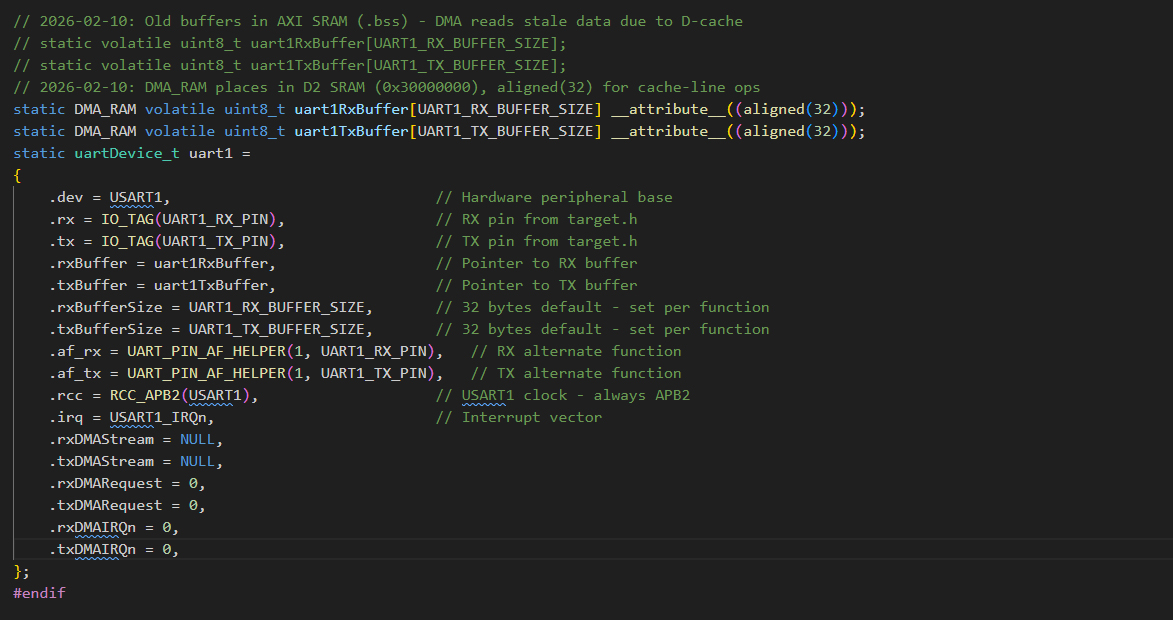
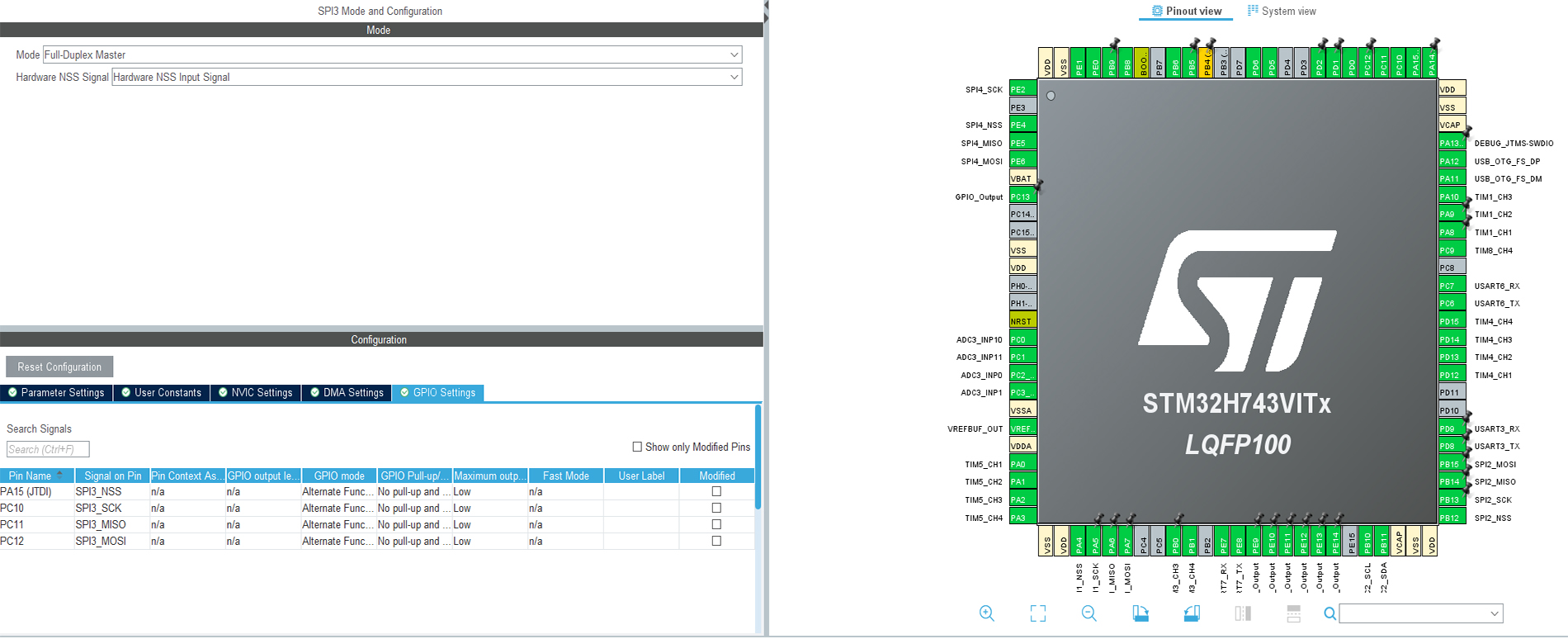
DMA-driven SPI sensor acquisition
Controlled SRAM region placement for deterministic access
Cache-aware buffer design
Minimal abstraction overhead
Direct memory and interrupt-level optimization
The system is engineered to minimize nondeterministic latency sources.
Sensor acquisition, fusion, transform, and projection are treated as a continuous pipeline rather than discrete application layers.
System Philosophy
This is not a UI overlay.
It is a spatial operating layer for physical airspace.
The architecture is designed to scale toward:
Networked object persistence
Multi-vehicle shared world states
Predictive vector tracking
Embedded spatial command interfaces
The goal is not simulation.
The goal is real-time digital sovereignty in physical space.